 FabFiligree
The craft
Vendi teega pani — silver wire-work.
In Telugu the craft is called vendi teega pani; its lattice, jali. A skilled hand turns out barely ten grams of finished work in a full day. This is what those hours contain.
1 · Melting and drawing
Work begins with silver ingots — the GI documentation specifies 92% purity and above — melted in a crucible over the bhatti with a trace of copper for workability. The cast rod, the chandi-kadi, is then pulled through the progressively smaller holes of a draw-plate (jantri) again and again until the metal runs as fine as hair. Wire-drawing is described in the GI application as “the heart of the silver filigree process.”
2 · Twisting and crimping
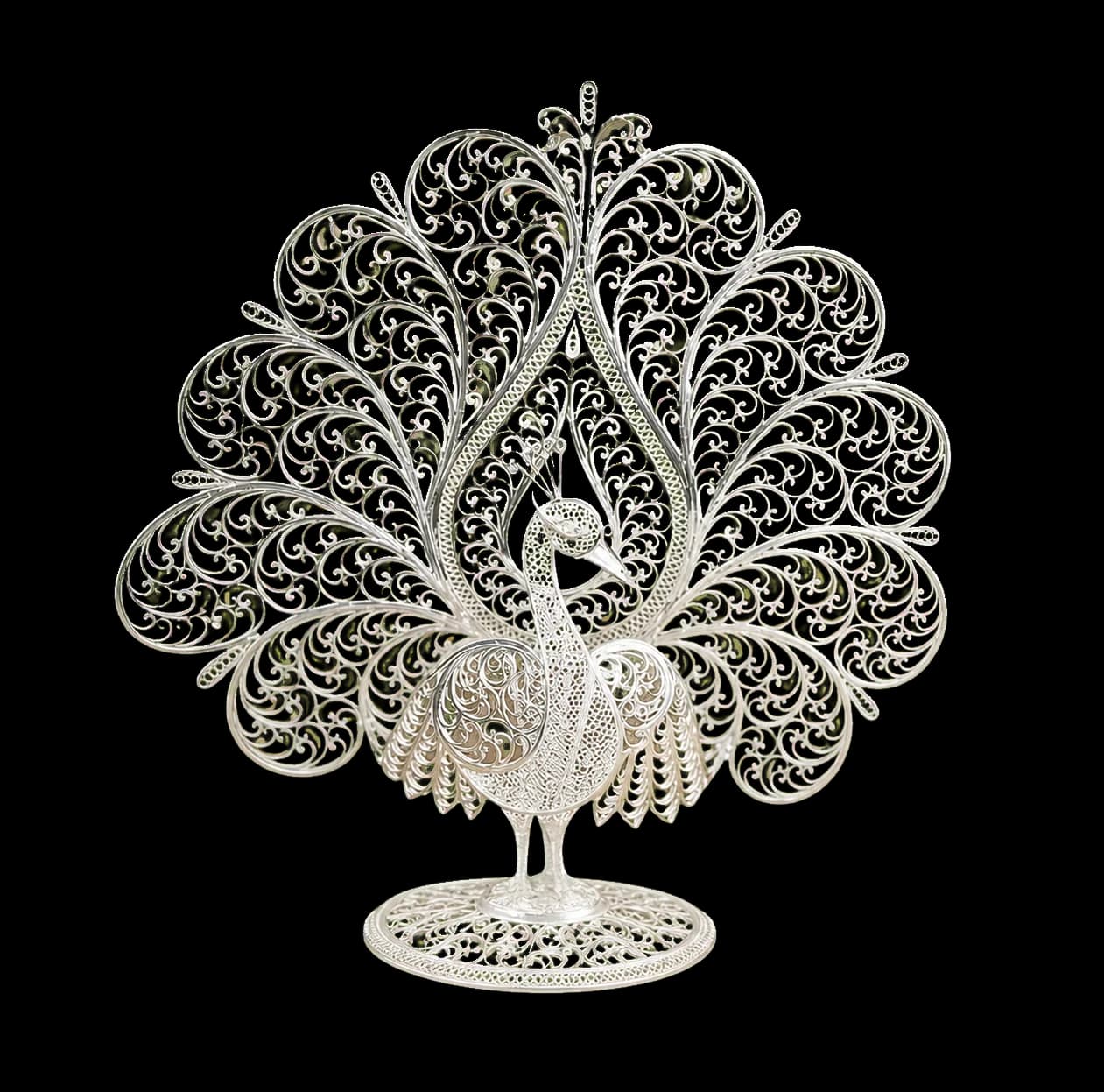
The two thinnest strands are wound on a charkha, spiralled together and flattened — this twisted wire is the thread that fills every pattern. Crimped into zigzags and coiled into spirals, it becomes leaves, creepers, birds and the open net the craft calls khulla jaal.
3 · Framework and filling
A heavier square-section wire (about 14 gauge) forms the outer frame; a lighter wire subdivides the space and outlines the subject. The delicate filler units are set inside — held first with beeswax on a board — then joined with a soldering paste of borax and crab-eye seed, fired over charcoal with a blowpipe. Two grades of solder are used: higher-melting for frames, lower for the filler, so nothing already joined comes apart.
4 · Setting, shaping, polishing
Design-setting — the final composition of units within the frame — is, in the GI record’s words, “by and large done by the women who give the best form to the craft.” The soldered panels are gently hammered to their three-dimensional form, heated once more to toughen, then cleaned with a brass brush and soapnut water and dipped in dilute acid until the metal turns its characteristic bright, near-white silver. Edges are burnished for contrast; a soft cotton cloth finishes the job.
Three named styles
- Khulla jaal — open-net work, the airiest form of the lattice.
- Flowers and leaves — botanical motifs filled with coiled wire.
- Meenakari — filigree ground prepared for enamel colour.
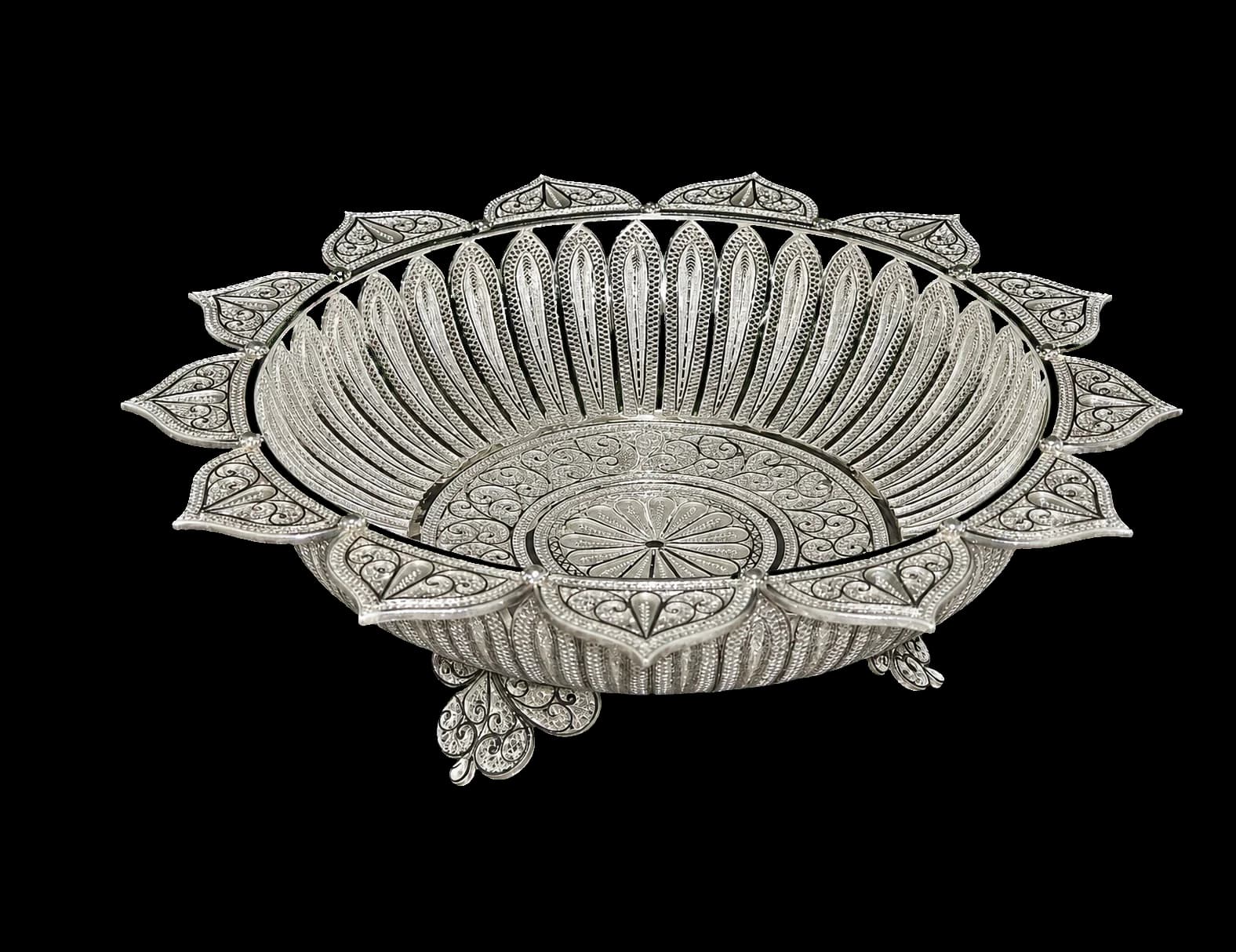
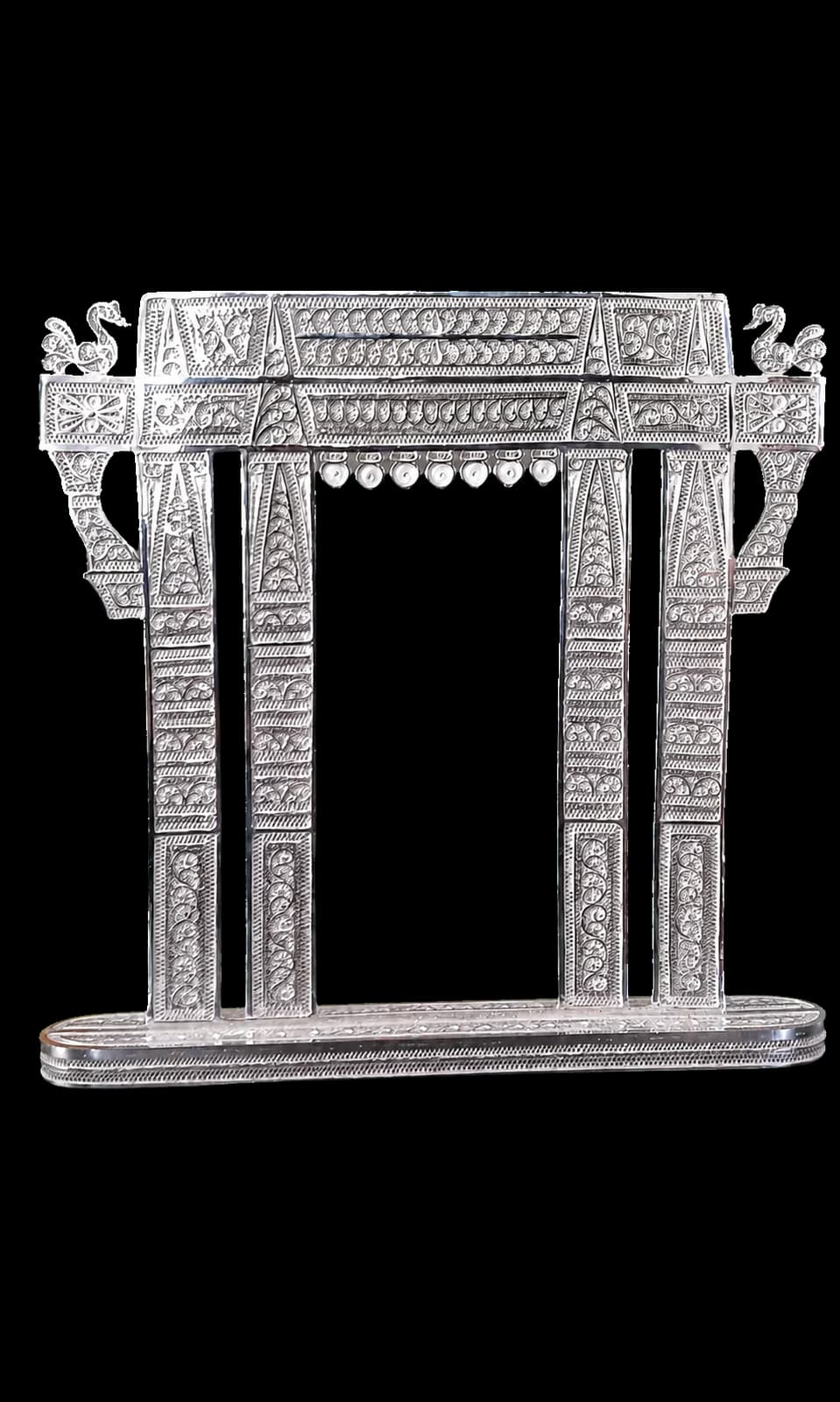
Negative space matters as much as silver: the gaps in the jali are drawn as deliberately as the wire around them. No two pieces come out alike — which is why every FabFiligree listing is one object, weighed and photographed as itself.
The sixty-second film
We are filming the full journey — ingot to finished lattice — in the workshops this season. It premieres with the next drop; the mailing list sees it first.